
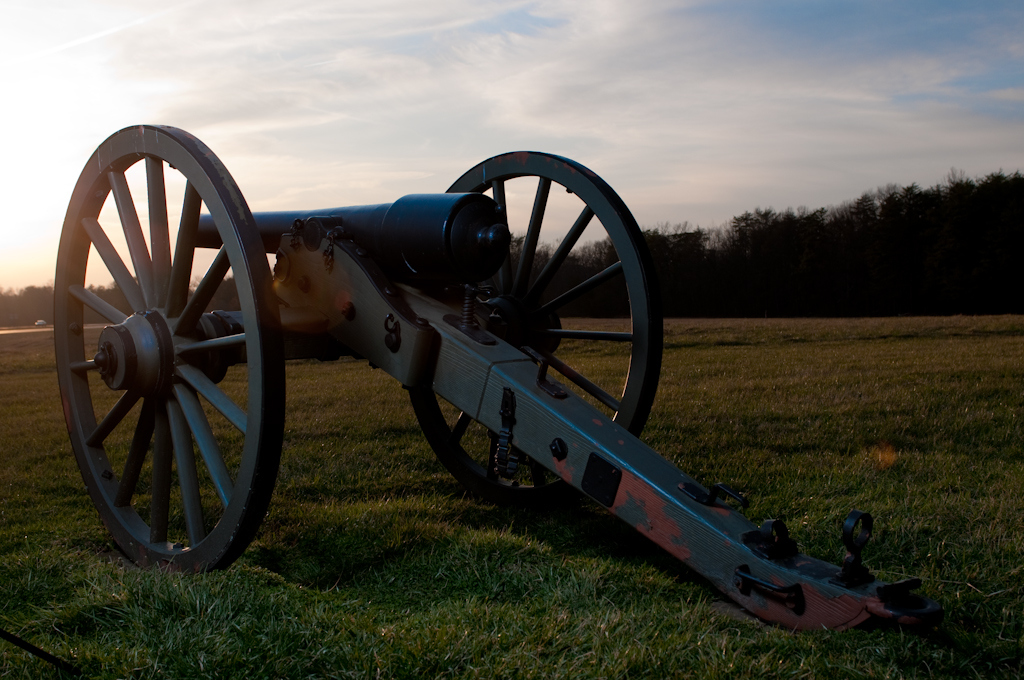
 As far as Walmart battles go, the proposed retail site for Orange County, Virginia is a doozy. Not only are the usual controversies brewing about mom and pop stores and wildlife habitat, but this proposed site happens to lie near (or on, depending on who you ask) the major civil battle site of Wilderness. So throw a serious historic preservation element into the mix. This fact has attracted national attention, along with a handful of high-profile activists from California (additionally Ben Stein, a prominent Conservative and Walmart supporter in general, weighed in against the store last month), thus adding an entirely different layer to the debate: between local determination and national interest. At the end of the day, local residents are the ones making the zoning decision but the Walmart corporation itself may want to back away from all of the widespread negative publicity. There are many moving parts to this.
Last night the Orange County Planning Commission held a public hearing on a Special Use Permit requested for the Walmart development. They voted to recommended denial, splitting the commission right down the middle 4-4. The Board of Supervisors is the elected body that will make the ultimate decision, but a Planning Commission vote is intended to carry some weight with the final decision. The roughly 100 residents who spoke at the hearing were split between those who approved of the Walmart, wanted the Walmart in a different location, and didn’t want it at all.
My wife and I paid a visit to the Town of Orange a few weeks ago, which is the county seat. In recent years, Orange has done a wonderful job creating a vibrant downtown core and a beautiful streetscape with small parks and the preservation of its depot. The atmosphere of the Town of Orange perfectly complements the various historic and natural resources in the surrounding area, making this an attractive place to visit, and, I imagine, a nice place to live.
 Some residents have expressed that they do not believe a Walmart will harm the vitality of the town. It’s on the other side of the county, and the retail offered by Walmart is perceived to be a different market that what businesses in Orange offer. Similarly, many believe the Walmart will not fundamentally harm the countryside either. After all, the building footprint will only be 130,000 sq. feet in a county of 342 sq. miles. There’s plenty of open space left. Yet the fact remains, that the traditional town and country model being pursued by some citizens is at fundamental odds with the modern spread-out suburban model best suited for the Walmart proposal. These two visions are, unfortunately, mutually exclusive as they are virtually always played out in reality.
Much attention is being paid to the site itself, being so close to the battlefield, that I think the larger land use trajectory of the decision is being overshadowed. This style of commercial development not only needs a certain level of roadway infrastructure and low-density residential development in its midst to function, but it also facilitates the creation of more of this development and infrastructure in the future. Walmart is a response to demand, but it also creates its own future demand by spatially reorienting its surroundings, almost like a magnetic force. The job of the Board of Supervisors is to take a full account of the costs and benefits of the proposal, not just of the individual commercial operation in question but all of its future implications for the whole community. It will be interesting to see how this debate turns out.
Photo Credit: flickr Section Eight
Daniel, thanks for sharing this. Boy, this one has it all, doesn't it. I'll be sure to keep my eye on it as well.
ReplyDeleteLate last night, approved 4-1 (Richmond Times-Dispatch).
ReplyDeleteThis comment has been removed by the author.
ReplyDelete